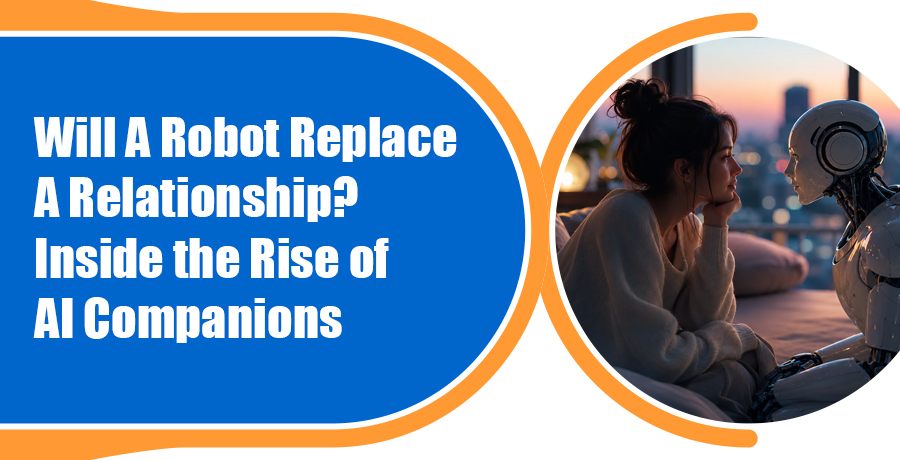
Why man is choosing to embrace the robotics of love? Why do people choose to participate in the love-robotics?
People's motives for taking these drugs are not strictly sexual. Some are widowed or divorced and don't want to date again. There are some who dread human dating because of their social anxiety. Others are just curious or attracted to the lack of rejection as they interact with no risk.
Companies selling these products emphasize this frame, suggesting the robotic closeness as a solution to the loneliness epidemic that public health experts from several countries have indicated as a serious issue. But if an AI companion can help with that loneliness, or simply mask it when it's there, is another story entirely, and one not being discussed in a truthful way in much of the marketing.
The Ethical Concerns Nobody Can Quite Agree On: An Analysis of the Proponents and Opponents of the "War on Cancer" in America.
There are a number of very different concerns raised here, and it's important to keep them apart from one another. The first relates to representation: many commercial sex robots are a caricature of the passivity of female beauty, and some researchers claim that this is normalizing the idea of a partner as a thing to be controlled rather than related to. The other is children, as a small number of companies have been criticized for providing customisable robots in child-like shapes (most countries have now begun to limit or even outright ban such products).
Another strand of criticism concerns the AI companion apps in particular; the concern here is not representation but reliance. Such systems are designed for pleasantness and endless patience, and some psychologists caution that often they can make normal human relationships look relatively tedious and burdensome.
As of yet, the Research shows the following:So far, the Research shows the following:
To be honest, the evidence is still very sparse. Even though at the time sex robots were marketed as a way to alleviate sexual violence and loneliness, a 2018 review by UK doctors cited by Yahoo! shows that there was no substantial evidence to back up these assertions. Recent research on Academic learning from AI companion apps has yielded mixed findings, with some users feeling truly less alone, and others displaying indicators of replacing social interaction they would have been engaging in with people into the use of the app. Most conclusions at this time are tentative, not definitive, as the technology has accelerated and the long-term studies have yet to keep up.
Where this technology could go
The short-term direction appears to be more towards the integration of AI in normal devices, as software is more cost-effective to enhance than hardware. Voice assistance and messaging services are likely to continue integrating more and more "persistent memory" and more "person-like" personalities, making it harder to tell that it's a helpful service versus a “relationship.” The physical robots are going to remain a niche, high dollar product for some time to come, as it remains very difficult to make believable movement and touching at this time.
Regulation is also lagging behind in terms of unevenness. Indeed, the EU has begun to consider companion AI within its larger framework of AI safety, while other nations have no specific framework whatsoever, and individual companies will have to establish their own limits in terms of data privacy, emotional manipulation and age restrictions.
Conclusion
Sex robots and AI companions are in a complicated space of technology, loneliness and intimacy, and neither claiming they're a fad nor claiming they're an actual replacement for humans is the full extent of the story. The truth is that the research has not yet "caught" the products which are already available. It's clear that artificial intelligence is redefining the nature of companionship, but how much room does that leave for the tools, no one is quite sure.