One of the most technically challenging operations in facial surgery is revision rhinoplasty -where the nose is reduced, is a procedure to correct. The cartilage is removed and replaced with cartilage grafts, which are typically taken from the ear or rib. A secondary rhinoplasty is more complex, takes longer, and is more difficult to recover from than a first rhinoplasty, and there is also a higher risk of having an unpredictable result. People who got smaller now want their nose back or at least something that looks like it's meant to be on a face.
Surgical philosophy has changed, and that's evident. The newer group of surgeons in the past five years has adopted preservation rhinoplasty, which preserves the original dorsum without attempting to shorten it. It achieves natural-looking results and fewer revisions. The aim is to create a nose which looks like it's always been there rather than one which proclaims itself to be a surgical creation!
Patients requesting the extreme reductions have not totally gone away. However, those that know better are fighting back against the surgeons' advice. That is progress.
When Too Much was Too Much: Excessive Facial Fillers
HA Fillers are really helpful. When used judiciously, they can add volume to skin that has lost it due to the passage of years, smooth lines and enhance the proportions of the face without surgical intervention. What began to happen is that “conservative” was no longer the benchmark around 2015 and a generation of patients found their faces to be “heavier” and “older” than the ones they had originally.
When your cheeks are overfull, they lift down instead of up. When lips are repeatedly filled, over time, the skin is stretched and this time, no more product can fix it, as the lips are now in a sausage shape. When used too thin or too much, tear trough filler can give an ageing appearance and causes the Tyndall effect, which is a bluish discolouration that appears through thin under eye skin.
Migration of the filler is also a concern. Hyaluronic acid can't always remain in place. With repeated treatments over the years, product can travel from the area it was injected, causing the face to become over contoured, and resulting in generalised puffiness that people say makes the face look swollen when it doesn't. It cannot be corrected with additional filler. Must be dissolved with hyaluronidase, and may be repeated.
There are currently 2 groups of people waiting in clinic for an appointment: those who want to get fillers and those who want them removed. The dissolving appointments are increasing. Filler fatigue is a clinically occurring condition, and it is pushing patients and practitioners back to using restraint.
Much of the demand for the excessive fillers has been taken up by the biostimulator category, products that stimulate collagen production but do not add volume, such as Profhilo and Sculptra. This means that the skin improves, but not structurally. It's not as sensational. That is the point.
Other Procedures are on the way out
Barbed sutures were very popular for use as a "lunchtime facelift. The complications, such as thread migration, irregularities and asymmetry, were challenging to fix and results lasted between 6 and 12 months in most patients. They are no longer in use for those patients seeking long-lasting lifting for their face as surgical facelifts and newer energy-based skin tightening devices are now the preferred methods.
Another procedure that is dropping out of popularity is the "fox eye" brow lift using threads. The appearance was very particular and fashion oriented, not scientifically based and the threads used to achieve it had the same migration and irregularity risk as other barbed suture lifts.
The very idea of a permanent filler was born of the continued demand for the use of HA and is nearly universally disapproved of. Products that migrate, granulate or cause chronic inflammation cannot be reversed. Usually surgical removal is needed. They are no longer recommended by most aesthetic medicine practitioners, although they may still be available.
What the Shift Tells Us
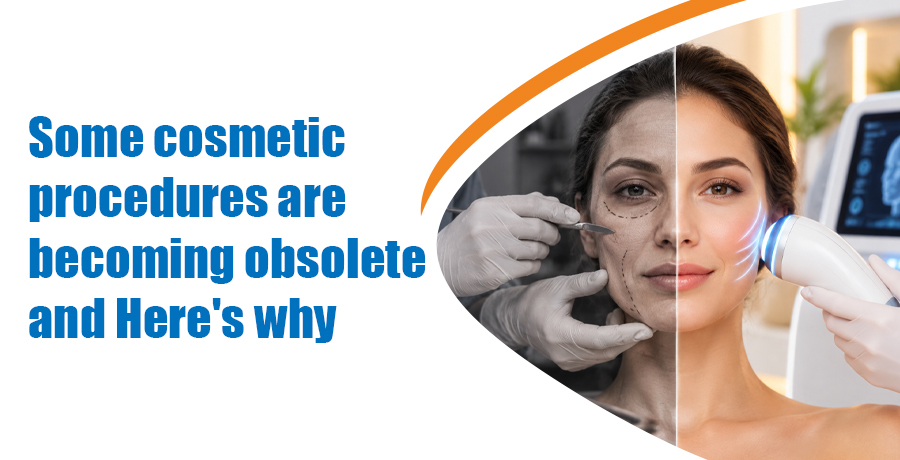
Fading out procedures have a common thread. They emphasized a 'showy' design more than functional anatomy, and they were more easily sold than turned around. In 2015, patients who desired them may not want the opposite in 2026.
The pull the other way – towards subtlety, towards getting results that feel like a bit of rest, towards working with rather than against the anatomy, towards procedures that do not contradict it – does not happen for a few days and it does not happen for a few weeks, either. It's about patients getting educated and expect more of the word of longevity rather than dramatic changes.
This is the discussion to have before any surgery if you are a surgeon. What you want to look like in six months, but also what you want to look like in ten years, and whether the technique that you are thinking of will be of service to you in 10 years. The ideal cosmetic result is a result that doesn't need to be straightened out.