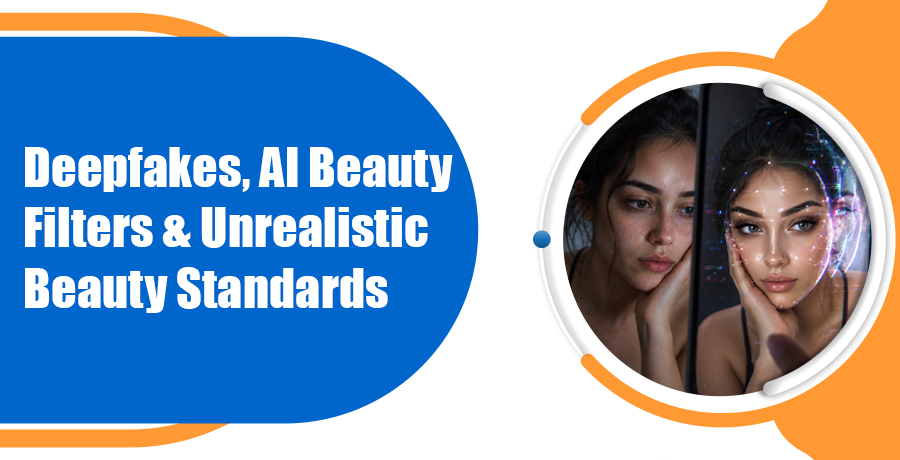
A patient once walked in and said she wanted a nose "exactly like my filtered selfie." It's a request that's coming up more often now, and honestly, it's not one that can be granted, because filtered faces usually don't correspond to any real, achievable anatomy. Beauty filters, AI-generated faces, heavily edited celebrity photos, all of it adds up to people comparing themselves to images that were never real to begin with. That gap is worth understanding, both for your own mental wellbeing and, more practically, for anyone weighing an aesthetic procedure.
How Filters and AI Quietly Distort Reality
Beauty filters today do a lot more than smooth out skin. They reshape jawlines, widen eyes, narrow noses, adjust proportions, often so subtly that people don't even notice it's happening to their own face. AI-generated faces take this further still. They're stitched together from thousands of images, averaged into a kind of "ideal" that no actual human bone structure has ever produced. And when these images just circulate online looking like normal, unedited photos, they end up quietly resetting what people think "normal" even looks like.
Why This Actually Matters for Mental Health
There's real research behind this. Comparing your own unfiltered face to a filtered or AI ideal, over and over, day after day, tends to chip away at self-perception. It can lead to genuine dissatisfaction, anxiety, sometimes a fixation on flaws that either don't exist or are barely noticeable to anyone else. Cosmetic surgery circles even have a term for it now: Snapchat dysmorphia. That's when a patient asks for a procedure to match their filtered selfie, not to fix something they're actually unhappy with in real life.
It helps to name this honestly instead of brushing past it. Before deciding on any cosmetic change, it's worth pausing and asking whether that feeling of inadequacy is coming from an edited image rather than a real physical difference.