
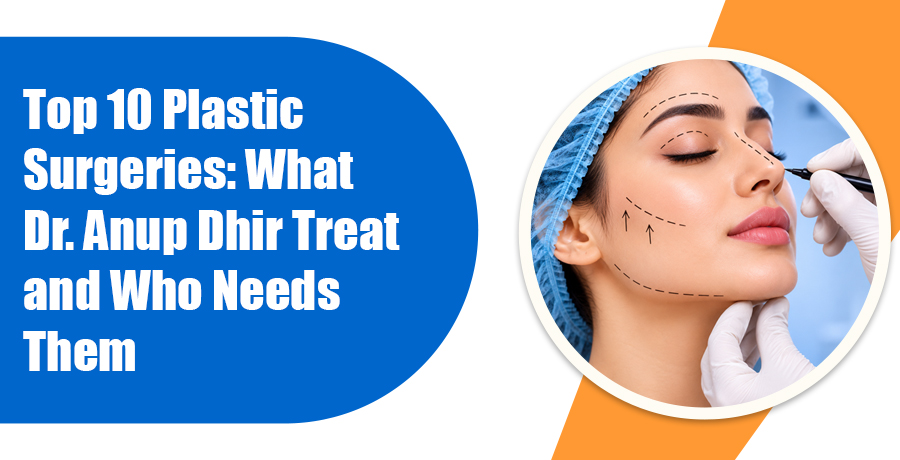
When people hear the word “plastic surgery,” they believe of nose surgery. The word itself has its roots in the Greek word plastikos, which means to shape or mold, and much of the specialty is repair: reconstruct skin after a burn, repair a cleft, save a badly broken leg. Plastic surgeons operate on the face, hands, limbs and trunk, on children and adults, following accidents, and at birth. These are the top 10 most frequently used procedures and a brief explanation of each procedure.
- Cosmetic surgery of the face and body: That includes facelift, eyelid surgery, nose job, tummy tuck and even breast surgery. The surgeon is reshaping tissue to create a new look and the procedure is designed to your anatomy and what you desire. Healthy, a stable weight, expecting an improvement and not perfection are good candidates. The swelling subsides over a period of weeks, and results can take several months to be finished.
- Acute burn management: The first hours make a great deal of difference. Cool running water for approximately 20 minutes is the proper first aid; the patient is then in need of a hospital. Treatment involves IV fluids to replace fluid that has been lost due to the burn, clean dressings and removal of dead tissue. Skin grafts are performed early in the course of deep burns. The primary risks are infection and fluid loss, so it's important to have a unit with experience treating serious burns.
- Post burn scar reconstruction: Burn scars may contract while healing. If this occurs across a joint, it is known as a contracture and restricts movement across the joint. The surgeon loosens the tight band, and closes the space with a skin graft, flap or Z-plasty, which is a plastic manipulation to lengthen the scar. Surface is assisted by laser, silicone and pressure garments. Typically, we wait until the scar has 'grown' and often we work in stages.
- Pressure sores: They are also known as "bed sores" and develop over the bony parts of the body like the lower back, hips and heels in patients that are unable to change positions. Early ones heal with the removal of pressure and cleanliness of the wound. Deep sores require removal of the dead tissue, and sometimes a piece of the surrounding muscle and skin to close the wound. If the pressure returns, surgery will not work and cushions, turning schedules and proper nutrition are a part of the treatment.
- Maxillofacial injuries: The jaw, cheek bone, eye socket or nose may be broken due to road accidents, falls and assaults. Once the airway and bleeding have been controlled, a CT scan reveals the fractures. Surgeons then realign the bones and secure them with small, titanium plates and screws. The object is to obtain a bite that closes correctly, eyes positioned on the same plane and a similar patient face.
- Lower leg injuries: Shinbone fractures frequently penetrate the skin allowing the bone to be exposed. The bone has to be mended, but so does the cover! Plastic surgeons use a flap to close these wounds, which carries a piece of muscle or skin with its own blood supply. This early procedure along with the orthopaedic team reduces the risk of infection and increases the chances of saving the leg.
- Post cancer reconstruction: Once cancer is removed, there's something missing: A breast, part of a jaw, a piece of the face. It is replaced with an implant, patient's own tissue or a combination of both during reconstruction. This can occur during the cancer surgery or months afterwards, and the time is determined by agreement with the oncologist. The first goal is to make it work, before it looks good.
- Lip and palate surgeries: Cleft lip or palate is a defect that develops before birth. Lip repair typically happens within the first couple of months of a baby's life and palate repair takes place later in the first year or so. The palate repair is done for feeding and speech. Treatment is a long-term process for many children, as they will require speech, dental and sometimes a second touch-up operation as they get older. One of the most challenging periods for parents is the first few months, so it's helpful to have a plan.
- Congenital abnormalities: Fused fingers, extra fingers, differently shaped ears; large birthmarks are all examples of some children being born with them. Others have abnormalities of the face and skull. Problems are timed separately. A syndactyly release (combining fingers back into separate ones) is frequently performed in infancy and ear reconstruction may be postponed until later in childhood. Surgeons plan for growth, function and family desires.
- Hand surgery: It is hands that do fine work: it's not that small injuries cause small problems, but big ones. Hand surgeons repair cut tendons and nerves, fix fractures, release the nerve from carpal tunnel syndrome, treat Dupuytren's contracture and reattach severed fingers by microsurgery. Post-surgery therapy is as crucial as the surgery itself. One of the most common causes of a stiff hand is to neglect to use it.
What recovery looks like
This is dependent on the procedure. A cosmetic procedure might require a week or two off work, a burn reconstruction might require weeks in hospital and months of rehab and a leg flap might require weeks at hospital and months of rehab. Don't agree to surgery until you get a realistic time frame, and who will you contact if something seems amiss at home. If the redness continues to spread, the pain gets worse or the wound becomes hot or opens up, call the clinic the same day.
Choosing the right surgeon
Ask to see if your surgeon has a recognized qualification in plastic surgery, the frequency of the procedure that you're interested in and what could go wrong. A good surgeon will tell you about surgery in a straightforward manner and let you know when there are better options than surgery.
Dr. Anup Dhir practices from his office at 101, Ansal Tower, 38, Nehru Place, New Delhi. To book an appointment, call +91 93123 77554.