
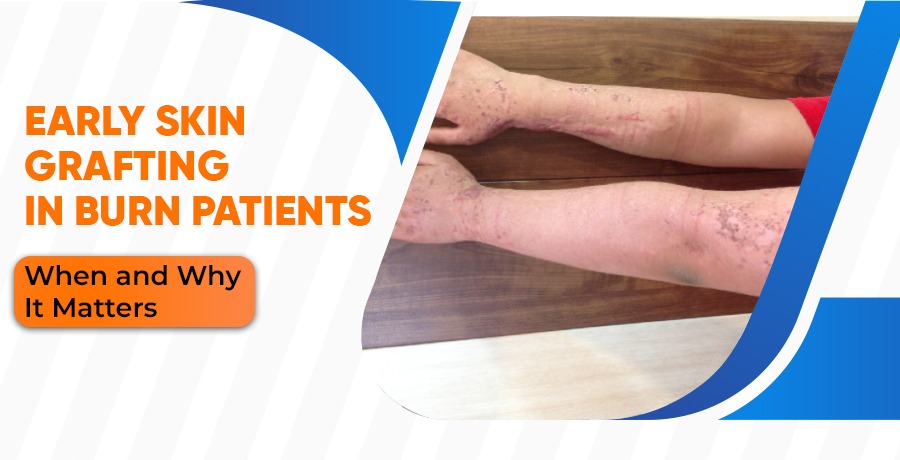
In the case of a burn that is severe, the body’s most important protective covering the skin is destroyed. This sets off a game of cat and mouse. For three decades, the conventional tactic for treating burns was to “wait and see” let the body try to heal itself before stepping in. Yet modern medical science has clearly shown that timely skin grafts can make the single biggest difference to survival rates and long-term functional outcomes.
For patients and families grappling with the complexities of burn recovery, understanding “when” and “why” this procedure is necessary to better plan their care.
What is Skin Grafting?
Skin grafting surgery is essentially the placement of healthy skin from one part of the body (donor site) in another, the burned area (recipient site). For deep partial-thickness and full-thickness burns, skin cannot heal on its own. Without a graft, these wounds do not close, resulting in excruciating pain, loss of fluid and a high risk of infection.
Critical Timing and Priority Areas
Modern protocols emphasize that early skin grafting should ideally be performed within the first week (typically days 3 to 7) following the injury. This window is vital to intercept the body’s inflammatory peak and prevent systemic complications.
While the goal is to cover all deep wounds as soon as possible, surgeons prioritize specific "high-value" anatomical regions to preserve the patient’s quality of life and basic human functions. The priority areas for grafting are:
- Face: To preserve sensory organs (eyes, mouth) and minimize psychological impact through aesthetic restoration.
- Genitals: To maintain urinary and reproductive function and prevent severe localized infections.
- Hands: Crucial for maintaining manual dexterity and the ability to perform daily tasks.
- Flexor areas of joints: Areas like the armpits, elbows, and back of the knees are grafted early to prevent contractures—tight scarring that can permanently freeze a joint in place.
The "When": Identifying the Optimal Window
Timing a graft is crucially important. Like much in medicine, clinical consensus defines "early" as usually somewhere between the first 3 to 7 days post injury.
- First-Degree Burns: These typically recover on their own with appropriate dressing.
- Deep Burns: If a burn is healing less than 10-14 d, or if it is categorized upon examination as third-degree, the plan is for surgical intervention within hours of hemodynamic stability.
The objective is to execute an Early Excision and Grafting (E&G)—cutting out the dead, charred tissue (eschar) and covering it with healthy skin before the body’s inflammatory response peaks.
The "Why": Why Early Intervention Matters
Preventing "Burn Sepsis"
Infection is the leading cause of death in patients with burns. Dead tissue is a bacteria reservoir. By surgically excising this tissue at an early stage and sealing the wound with a graft, surgeons “close the door” for pathogens. So grafting early is, in fact, a life-saving prophylactic for systemic sepsis.
Reducing the Hypermetabolic Response
An extensive open wound throws the body into what could be described as a metabolic “overdrive.” The heart beats harder, body temperature climbs and muscle mass starts to break down as the system attempts to repair the damage. When the surgeon closes up the wound with a skin graft, he tells the body that the emergency is over and the metabolic rate can return to normal, preserving energy for rehabilitation.
Minimizing Hypertrophic Scarring
Deprived of guidance, the body builds up too much, thick and disorganized collagen when a wound heals on its own for too long. This results in raised, red and itchy burn marks. Before the advent of grafting, this transition caused significant scarring to the new tissue that formed and prolonged healing time but with early grafting within a few weeks post-injury into a physiological environment, these scars are minimized.
Preserving Mobility and Function
One of the most devastating burn complications is contracture — when skin heals so tightly that it prevents movement at joints. This is particularly true in cases of burns of the hands, neck and limbs. Early grafting helps keep the skin supple and elastic, which is important for the best range of motion.
Types of Skin Grafts
Surgeons may employ various techniques depending on the depth and location of the burn:
- Split-thickness Grafts: Composed of the epidermis and some dermal tissue. All these are mostly used in cases for larger surface areas.
- Tissue Grafts: The type of graft that you may be put onto include; This is because they shrink less and appear more natural, which is often desirable for visible spots such as the face or functionally significant areas like the palms.
- Skin Substitutes: In cases of diminished healthy donor skin, temporary biosynthetic covers may be used to allow enough time for a permanent graft.
Recovery and Aftercare
But the success of skin grafting treatment for burns does not end in the operating room. Post-operative care includes careful dressing changes, monitoring the “take” of the graft (when the new skin starts to get its own supply) and physical therapy.
Previously, it wasn’t even possible to treat burn marks with skin grafts until many years after an injury; now modern techniques can make them more supple and less visible.
A Path to Restoration
In short, early skin grafting is more than a surgical technique; it is an indispensable treatment that can make the difference between survival and high quality. Patients can avoid such a lengthy stay and possibility of complications by opting for early intervention, not only cutting down the duration of recovery but also making it more functional and aesthetic in nature.
Specialized Burn and Reconstructive Care
If you or a loved one are seeking expert consultation for acute burn management or reconstructive options for existing scars, trust in specialized expertise. Dr. Anup Dhir is a renowned specialist in skin grafting surgery, offering advanced techniques to ensure the best possible functional and aesthetic results.
Restore your skin and your confidence.
Visit Anup Dhir - Cosmetic & Plastic Surgery to schedule a professional consultation and explore advanced treatment options.