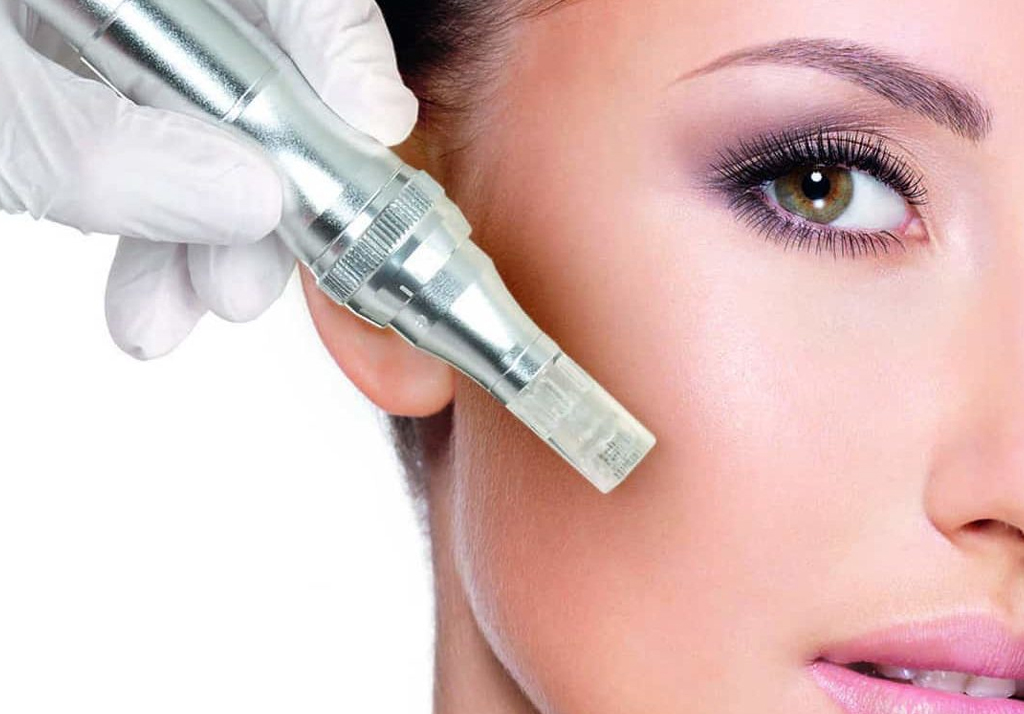
Microneedling is a nonsurgical technique, which uses application of mechanical force to the skin, via fine needles, to stimulate the proliferation of cells. This new cell formation, lays down new collagen and elastin tissue, which improves the appearance of fine lines, wrinkles, stretch/scar marks, pigmentation or other irregularities in the skin. It also improves the blood supply by formation of new capillaries. This technique can be used on any part the body like face, neck, arms, abdomen etc.
After thorough cleaning, the area of the skin is numbed using a local anaesthetic cream. A pen like device which has about 12 fine needles, is used to pierce the superficial layers of the skin. After completion, a soothing cream is applied on the treated area to calm, heal and protect it. There may be minor bruising, pinpoint bleeding points, inflammation (like a sunburn appearance) and swelling of the treated area, which usually lasts for 24 to 48 hours. We will recommend using soothing creams and zinc based sun sunscreen.
Protect yourself from sun exposure and avoid using glycolic acid or retinol products on the treated area for a few days. Within a week or so the skin appears smoother and glowing but the final results will be apparent only in a few months. A session can be repeated in 4 to 6 weeks. The number of sessions needed to produce the desired results will depend on the abnormality being treated. In most cases, 4 to 6 sessions are sufficient initially and then 1 to 2 sessions a year to maintain the result.
The advantage of microneedling is that it can be used on all skin types and has no major side effects. This technique is not suitable for someone who has used isotretinoin recently, had radiation therapy to the area, has poor wound healing, is breast feeding or on infected or inflamed skin. People prone to keloid formation should also avoid micro needling. Microneedling is a simple and effective way to improve skin irregularities using a natural filler.
RF Microneedling takes the basic idea of traditional microneedling and adds something extra to it, radiofrequency energy delivered through the same fine needles. So while the needles are creating those tiny channels in the skin, radiofrequency waves are simultaneously sending heat into the deeper layers, which triggers a much stronger collagen and elastin response than microneedling would get on its own. It's that combination that makes it so effective for things like acne scars, enlarged pores, fine lines, uneven texture and even mild skin laxity, because it's working on the surface of the skin and its deeper structural support at the same time.
Microneedling itself is a nonsurgical technique that uses fine needles to apply controlled mechanical force to the skin, which stimulates the skin to produce new cells. As those cells form, the skin lays down fresh collagen and elastin, and that's what ends up improving the appearance of fine lines, wrinkles, stretch marks, scars, pigmentation, and other irregularities. It also helps improve blood supply to the area by encouraging new capillaries to form. This isn't limited to the face either, it can be used pretty much anywhere on the body, including the neck, arms, and abdomen.
The process starts with a thorough cleaning of the skin, followed by a local anaesthetic cream to numb the area. A pen like device with about 12 fine needles is then used to pierce the superficial layers of the skin. Once that's done, a soothing cream is applied to calm, heal, and protect the treated area. It's normal to see some minor bruising, pinpoint bleeding, redness that looks a bit like sunburn, and mild swelling right after, and this usually settles within 24 to 48 hours. We typically recommend soothing creams along with a zinc based sunscreen during recovery.
It's also important to stay out of the sun during this period and avoid glycolic acid or retinol products on the treated area for a few days. Within about a week, the skin already starts looking smoother and has more of a glow, though the full results only become apparent over the following months. Sessions can be repeated every 4 to 6 weeks, and how many are needed really depends on what's being treated. Most people do well with 4 to 6 sessions to start, followed by just 1 to 2 sessions a year to maintain results.
One of the biggest advantages of microneedling is that it works across all skin types and doesn't carry major side effects. That said, it isn't right for everyone. It should be avoided by anyone who's recently used isotretinoin, had radiation therapy to the treatment area, has poor wound healing, is breastfeeding, or has infected or inflamed skin. People prone to keloid scarring should steer clear too. At the end of the day, microneedling is a simple, effective way to improve skin irregularities, almost like using your own skin as a natural filler.
Sometimes one treatment isn't enough to address everything going on with a patient's skin, and that's where treatment stacking comes in. It basically means combining more than one aesthetic procedure into a single treatment plan, each one targeting a different layer or concern. RF microneedling pairs well with things like lasers, skin boosters, or biostimulatory injectables, which means surface level concerns like texture can be handled alongside deeper structural changes, all as part of the same overall approach.
That said, the right combination, along with the order and timing of each treatment, really needs to be worked out on a case by case basis after your doctor has properly assessed your skin. That's the only way to make sure the results end up looking safe, natural, and lasting.

Leave a request to connect to Dr. Anup Dhir for an Appointment.