
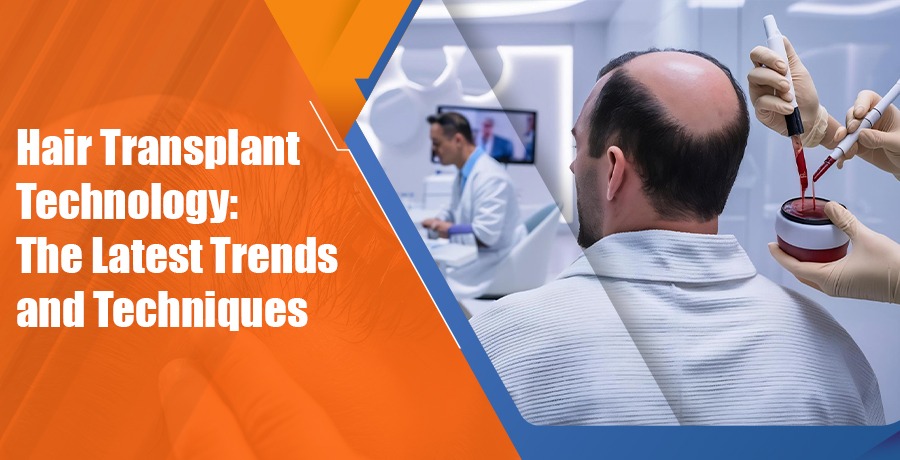
Hair transplantation has advanced significantly since the days of the obvious "plugging" method used in the 1970s. Nowadays, thanks to technological advances and improved techniques, men who experience hair loss can expect to experience natural-looking results through the process of hair restoration. With the introduction of more natural-looking results achieved through the application of modern technologies and the skill of medical professionals, men who experience hair loss have a greater variety of options available to them than ever before, and they will continue to have those options for years to come.
The hair transplant methods have changed over the years, and now we are seeing a tremendous amount of progress in the field of plaid, strip and robotic hair restoration technologies. Because there are so many different methods of hair transplantation being developed today, you may wonder which technique is best for you. That is what this guide is designed to answer: we will break down the current trends in hair restoration, describe the most common forms of hair transplanting methods, and debunk the most common myths that cause confusion for men who are dealing with male pattern baldness (MPB).
The Titans of Transplant: FUT vs. FUE
While younger men do seek treatment, the majority of hair transplant patients are in the 45+ age group. For these patients, the two most reliable and common procedures remain FUT and FUE. Both offer high efficacy—with graft survival rates up to 90%—but they achieve results in very different ways.
1. FUT (Follicular Unit Transplant)
Also known as the "Strip Method," this technique has been a gold standard for decades.
- The Procedure: The surgeon removes a thin strip of skin from the back of the scalp (the donor area). This strip is then divided under a microscope into individual follicular units to be implanted into balding areas.
- Pros:
- No Shaving Required: Unlike other methods, you do not need to shave the back of your head, meaning there is no visible "bald patch" during recovery.
- High Yield: It allows surgeons to transplant a higher number of grafts in a single session.
- Cons:
- Scarring: It leaves a linear scar on the back of the head, which may be visible if you wear your hair very short.
- Recovery: The recovery period is generally longer (about two weeks) with more potential for post-procedure discomfort compared to FUE.
2. FUE (Follicular Unit Extraction)
FUE is currently the most popular new hair transplant technology due to its less invasive nature.
- The Procedure: Instead of a strip, the surgeon uses a small circular punch tool to extract individual hair follicles directly from the scalp one by one.
- Pros:
- No Linear Scar: FUE leaves tiny, dot-like marks that are virtually undetectable once healed, allowing for very short haircuts.
- Faster Healing: Recovery is quicker (often around one week) with less postoperative pain.
- Cons:
- Shaving: The donor area usually must be shaved, which can be cosmetically challenging for some patients immediately after surgery.
- Cost & Time: It is more labor-intensive and typically more expensive than FUT.
The Next Generation: Advanced Micro-FUE & No-Shave Techniques
As technology improves, surgeons are refining FUE to be even more precise. New variations of hair transplant technology are focusing on minimizing downtime and maximizing aesthetics.
Advanced Micro-Extraction
Although modern methods of FUE surgery use smaller "micro-punch" tools and advanced blade types like diamond or sapphire blades, the ability to cut the scalp with micro-incisions helps minimize trauma to the donor sites. The precision involved in creating micro-incisions also helps to preserve the hair follicles in the surrounding area (cohorts) and to ensure that the implanted (transplanted) follicles will grow at the same angle and in the same manner as the original hair on your head.
No-Shave FUE
- For many professionals, having to shave their head before their FUE procedure is a major concern. However, with "No-Shave FUE," this issue has now been resolved.
- How the No-Shave FUE procedure works: The surgeon uses specialized tools to extract hair follicles without having to shave the entire donor area.
- The advantage of this procedure is that you will be able to have your hairstyle maintained and not have any visible signs of having had an FUE procedure until well after the procedure is completed and healed.
- The disadvantage of No-Shave FUE is that it is a more demanding procedure than traditional FUE because of its high labor requirements and the level of surgical skill required to accomplish this level of precision during the hair transplant procedure.
Boosting Results: The Role of PRP
In order to maximize the effectiveness of hair transplantation, more and more surgeons are combining surgical procedures with PRP (Platelet Rich Plasma) Therapy.
PRP serves as a "nutrient" for your implanted hair. PRP is derived from your blood, spun in a centrifuge to separate the Platelets from the Rest of the Blood, and then injected into your scalp.
- The Benefits of this procedure are increased blood flow to the hair follicles, decreased healing time of the grafts(s), and may even minimize shock loss (shedding) post transplant.
- The Timeline of PRP treatments varies based upon when your first treatment takes place, and typically occurs three weeks following surgery, with follow-up sessions taking place approximately every 2-6 months thereafter.
Myth Buster: Stem Cell Hair Transplants
Surgical implantation of stem cells to regain hair growth is still considered experimental and has not been endorsed by the FDA as a valid hair transplant procedure at this time. Although researchers have achieved some promising results with the use of stem cells to stimulate hair growth in lab experiments, there are no products available that can completely "regenerate" dead hair follicles through topical application of stem cells alone. Until proven safe and effective by ongoing scientific studies, surgical FUE and FUT techniques should be regarded as the most reliable methods of restoring hair loss.
The Future of Hair Restoration
The key determinant of quality in hair restoration will be your surgeon's competence. Not all clinics offer cutting-edge technologies for their hair transplant surgeries, so the level of expertise provided by the medical team is critical to your final outcome.
Are you ready to increase your self-confidence?
Dr. Anup Dhir is a board-certified plastic surgeon with 30+ years' experience performing aesthetic procedures. We provide a full range of options for hair restoration – from FUT and FUE techniques to PRP therapy and non-surgical alternatives.
Contact us today to schedule a consultation and find out which technique is right for you.